

Editorial
By Rebecca Vang, CEO
Transparency is not a one-time statement, but a practice. It’s something you return to, year after year, even when the work behind it is complex and time-consuming. For us, it’s one of the most important ways we stay honest about what we do, why we do it, and who our decisions impact.
We believe quality and fairness belong together, and that the people behind the coffee matter as much as the coffee itself.
As Karl Wienhold explores in his accompanying article, higher prices and higher quality don't automatically lead to a more equitable supply chain. Transparency is one of the few tools we have to understand where value actually goes.
This is our ninth annual Transparency Report. Nine years of sharing the numbers behind each and every coffee, because we want you to know what you're part of when you choose Coffee Collective. Thank you for reading, and for being part of the collective.

Beyond the Vibes
By Karl Wienhold, Researcher & Author
Is specialty coffee more equitable for farmers than undifferentiated ‘commodity’ coffee? Karl Wienhold, researcher and author, explores this question.
Across multiple specialty segments, most of the additional revenue generated by differentiation is not captured by the farmers responsible for it. This stands in contrast to the ‘reap what you sow’ assumption that compensation follows contribution, and instead points to the role of power asymmetries and rent extraction.
Recognising this dynamic as neither natural nor inevitable is a prerequisite for changing it. Within the observed range, there are cases where outcomes are significantly more favourable to farmers, demonstrating that more equitable distributions are possible. If specialty coffee is to remain viable in the long term, these models need to be identified, supported, and replicated.
Unfortunately, they cannot be detected from vibes alone. We still need the data.
Read the full article in the report


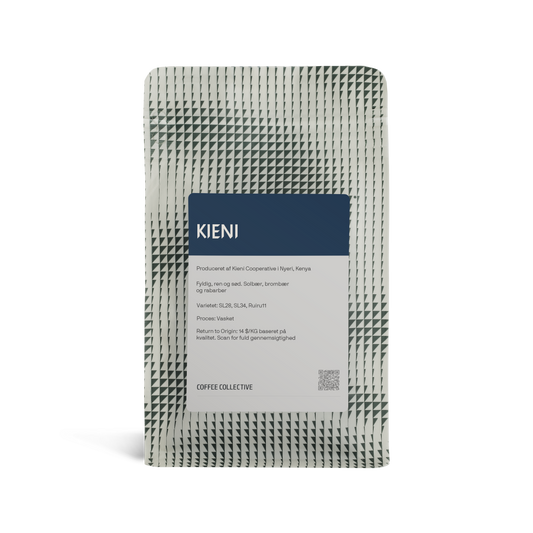
Collective subscription
Transparent Coffee Evaluation
By Peter Dupont, Co-founder
Since the beginning of Coffee Collective, we have not used the common cupping sheets because we find them overcomplicated and, as such, not very transparent. And the calculation from a very complicated form to a single digit that should describe quality, we find, is oversimplifying.
The biggest concern we have is that, for too many farmers, these methods are alienating them from understanding the quality of their own product. Unfortunately, what we often see is that buyers have a cupping lab with people in white coats who cup the coffee and let the farmer know the score of their coffee. It’s done in a way where farmers frequently don’t dare to argue about the quality. In addition, it might be very hard for them to figure out what they can do to improve their quality to get a higher price if they just get told their coffee is ”82”.
We see this as a very serious problem where the dominating methods for evaluating quality just become a power tool for the buyers to shortcut price negotiations because they present a tool that erroneously is considered scientific and with the capacity to objectively describe a coffee’s quality. We therefore are working, together with CoffeeMind, on a new way of quality evaluation that is not only more transparent but also more scientifically sound.

Social and environmental indicators
At Coffee Collective, we believe that long-term responsibility is not solely about environmental impact but equally about the people who make our company come alive. Social well-being is rooted in a safe, fair, and meaningful workplace where employees succeed professionally and feel valued personally.
We carry a responsibility for our people. To ensure accountability and continuous progress, we track the key markers in our Transparency Report including employee satisfaction, trust, turnover, sickness-%, work accidents, salary development across genders and gender representation in management positions.
These measures confirm where we are succeeding and help us to focus to areas of noteworthy variance that need continuous work.
See the table

Data on how we buy coffee
At Coffee Collective, we have long-lasting relationships with farms, often over a decade. We value these mutual relationships and stay open to create new ones. And while price transparency cannot be seen as an end in itself, we are convinced that it plays an integral role in the long-term process of countering the exploitative structures in today’s coffee market.

At Coffee Collective, we value complete transparency from farm to cup. We have strong tracing structures to collect all the data presented in the transparency table. A trusting relationship with our suppliers allows us to fully understand all the processes that work together to deliver the final coffee experience.
We hope our take on responsible relationships can inspire other companies to set up similar structures and incorporate them into their own business. Hopefully our transparency can inspire consumers and others to ask questions to get relevant facts and data from coffee companies to go beyond the beautiful stories we all in the coffee industry excel in telling. After decades of historic low prices on the global coffee market, we have seen a significant rise in early 2025.
In February the ICO Composite Indicator Price (I-CIP) reached an all-time high of 354.32 US cents/lb. Prices remained volatile throughout the year and towards mid-December dropped down to 283.21 US cents/lb. Early hopes of lastings corrections in low prices were thus deflated and the developments highlight our view, that farmers need long-term security of profitable income.
You taking part in the collective made it possible for us to send more than 10 million kroner directly back to producers in 2025. Thank you.


